
There's a popular argument floating around creative circles that artificial intelligence is ruining everything. Design is dead. Writing is dead. Original ideas are apparently lying face down in a ditch somewhere, waiting for a tasteful memorial service.
We'd like to offer a slightly less dramatic diagnosis.
The tools aren't the problem. The people willing to publish whatever comes out of them without a second thought are doing plenty of damage on their own.
And before anybody starts sharpening a pitchfork, we use AI at Clever Fox Creative. We use it to explore possibilities, speed up tedious work and build things that would've taken far longer with yesterday's tools. We're not going to pretend otherwise. The difference is that we don't consider a generated first attempt the finished product simply because a computer delivered it confidently.
The Tool Doesn't Have Taste
Open a design app, choose a template, change the company name and export. Congratulations. You now have a logo, a social graphic or a website header. You also have something that may look remarkably similar to what a hundred other businesses are using.
That problem existed long before generative AI. Stock photography, website templates and ready-made logos have been available for years. Technology keeps making creative production faster and more accessible. That's mostly a good thing.
But making something is not the same as making something worth using.
Good creative work takes judgment. Somebody has to figure out what a business is trying to communicate, who needs to hear it and why the audience should care. Somebody has to notice when the typography feels wrong, the headline says nothing, or the website looks impressive while hiding every useful detail.
A tool can help produce options. It doesn't automatically make the right one obvious. That's the work.
We're Drowning in First Drafts
If you've spent any time scrolling through marketing content recently, you've probably seen the symptoms. Every company is suddenly "redefining the future." Everybody has a "game-changing solution." The smiling people in the images seem to have the same dentist and the same suspiciously perfect office furniture.
The problem isn't that a computer helped create the material. It's that nobody stopped to ask whether it sounded like the company, explained anything useful or gave anyone a reason to remember it.
When the work can be produced in minutes, the temptation is to stop at minute three.
We understand the appeal. Business owners have actual businesses to run. Marketing teams are stretched thin. People need assets yesterday, and plenty of tools promise to make that possible.
But speed can conceal a spectacular amount of mediocrity. Publishing ten forgettable things instead of one worthwhile thing doesn't suddenly make the strategy better.
There's nothing brave about hitting Generate and hoping the customer won't notice.
A Prompt Isn't a Creative Direction
Here's an experiment. Ask a tool to design a modern, professional website for a local business. You'll probably get something recognizable: a giant headline, a polished hero image, three service cards, a testimonial section and a contact button. Nothing necessarily wrong with any of it.
Now ask yourself what makes that particular business different.
What do its customers worry about before calling? What information are people always asking the front desk to repeat? Is the business competing on speed, specialization, experience, personal service or something else entirely? Which part of its story would make a potential customer stop and say, "These are the people I need"?
You can't answer those questions with adjectives like "sleek" and "premium."
Creative direction means finding the answer and building around it. Sometimes the result is beautifully simple. Sometimes the right idea is a little strange. Either way, it's informed by something more useful than a trend.
We recently built a custom court designer for Champion Flooring. Customers can explore and customize multi-sport court layouts before requesting a quote. That's not a feature you arrive at by asking for another nice-looking flooring homepage. It starts with thinking about what a customer would actually find useful.
Technology helped us bring the idea to life. The idea still had to come first.
Using AI Doesn't Make You Less Creative
There's a strange expectation that creative people should prove their authenticity by doing everything the slowest possible way.
We don't subscribe to that.
A photographer isn't less creative because the camera has autofocus. A designer doesn't lose their instincts by using smart layout tools. And a developer doesn't become less capable by automating repetitive tasks.
What matters is whether those tools improve the result.
AI can help organize complicated information, explore directions, catch mistakes, suggest approaches or reduce the amount of time spent doing work nobody particularly enjoys. Used thoughtfully, that can free someone to spend more attention on the details that actually deserve it.
The catch is that you still have to recognize when the output is wrong. A polished answer can contain a completely made-up detail. A beautiful picture can show something that doesn't exist. A clever-sounding headline can misrepresent the business it's supposed to promote.
If you're putting your client's name on the work, checking those things isn't optional.
Your Customers Don't Hire Your Software
Imagine two agencies pitching the same website project. One tells you about all the tools it uses. The other asks questions about your customers, your business and what you need the website to accomplish.
Which conversation sounds more useful?
Nobody hires a creative company because it can click a button. They hire it because they want expertise, ideas and an outcome they couldn't easily produce on their own.
That's especially true for businesses that have already been burned by a website that looked decent in a preview and turned into a headache after launch. The pretty part is only the beginning. Navigation, accessibility, mobile behavior, content structure, ongoing updates and the ability to generate real inquiries all matter.
The City of Girard website is another example from our work. Its design needed to represent the community, but residents also needed clear routes to services and city staff needed a practical way to manage information. Those decisions aren't about which shiny tool is in fashion this month. They're about the people who rely on the finished site.
The software is part of the process. It isn't the point.
The Real Competitive Advantage Is Caring Enough to Keep Going
Here's where we'll probably annoy a few people.
If your entire service consists of feeding a client name into a generator, accepting the first output and charging premium creative rates, you're not offering much creative value. You're selling convenience with a very impressive invoice.
And if you're a business owner using these tools yourself, that's fine too. Plenty of projects don't require an agency. A quick internal flyer probably doesn't need three rounds of art direction and a strategy workshop.
But when the work represents your business publicly, influences customer trust or needs to perform for years, it's worth asking whether "good enough" actually is.
Look closely. Read the words aloud. Try the website on a phone. Make sure the photographs represent something real. Ask whether the content sounds like your company or like a machine that has been trained to congratulate every business on its commitment to excellence.
Then improve it. And improve it again if it still isn't right.
That part hasn't changed, no matter how sophisticated the tools become.
We Aren't Afraid of Better Tools
We're excited about what creative technology can do. There's a lot we're still learning, experimenting with and figuring out how to use responsibly. We expect the tools to keep changing, and we'll keep changing how we work with them.
But we have no intention of lowering the standard just because producing something average has become ridiculously easy.
If anything, the bar should be higher. When making content is cheaper and faster, putting actual thought into that content becomes even more important.
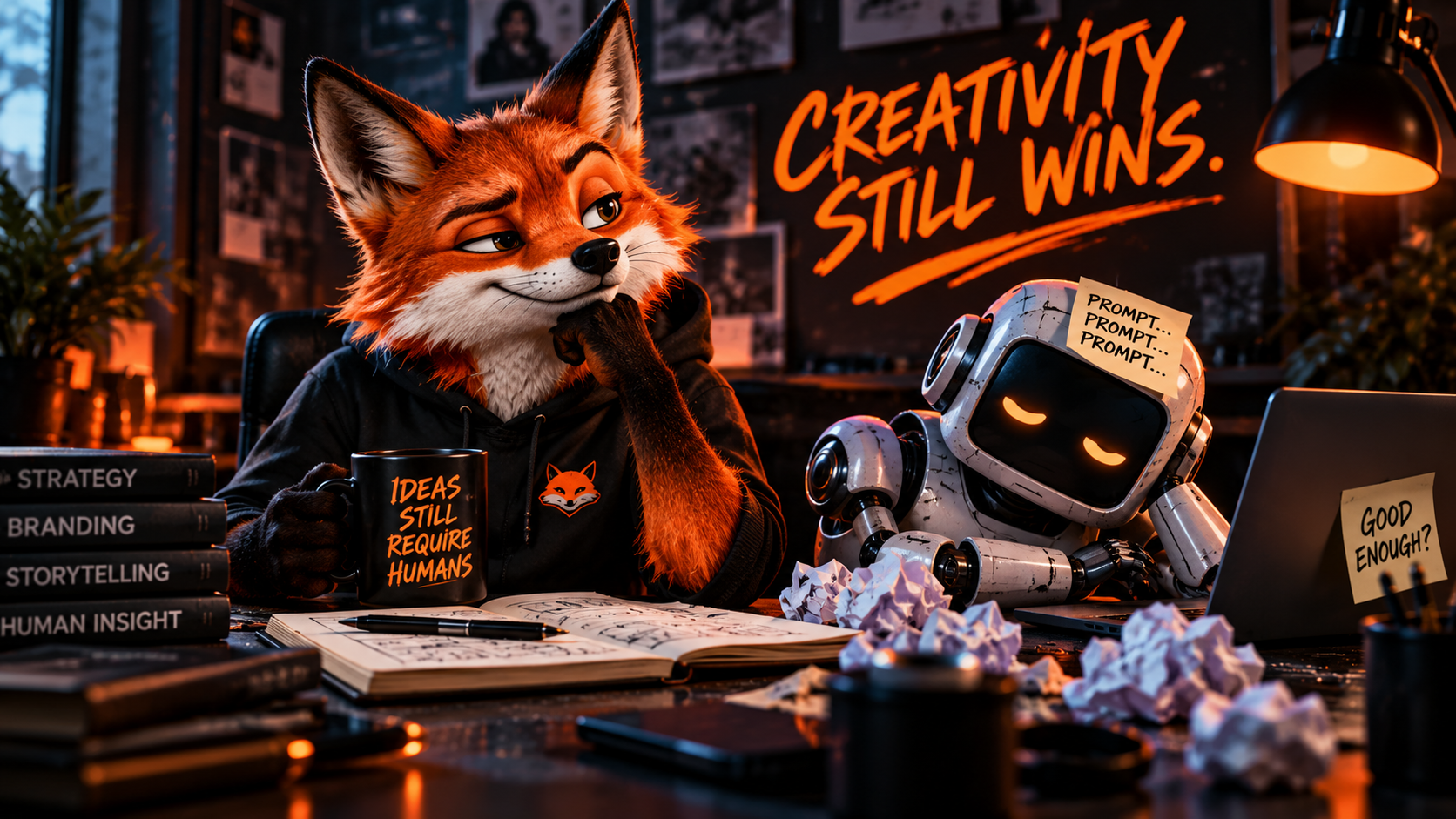
AI didn't take away anyone's ability to have a good idea.
It just made it easier to spot who was relying on the tool to have one for them.